
Beth Twigs is a choreographer and multidisciplinary dance artist whose work invites rigor, vulnerability, and imagination to coexist. In her new commission for Olympic Ballet Theatre, Our Tender Distance, she brings a collaborative, inquiry-driven process into the studio. We spoke with her about the ideas and experiences guiding the creation of this work.
What does “tender distance” mean to you?
“Tender Distance”, to me, reflects the quiet space within close relationships that allows for healing, self-care, and autonomy while still sustaining connection. It lives in the moments when we may feel too raw for full vulnerability, yet still long for and need companionship and intimacy.
This work is set to music by Gaspar Claus. What drew you to his music, and how does it influence the emotional and/or physical landscape of the choreography?
I am drawn to the layered quality of Gaspar Claus’s music — textured yet spacious, complex yet unforced. Its simplicity and repetition helped shape the structure of the work, while the score’s shifting weight between darkness and lightness inspired our exploration of heaviness and levity throughout the ballet.
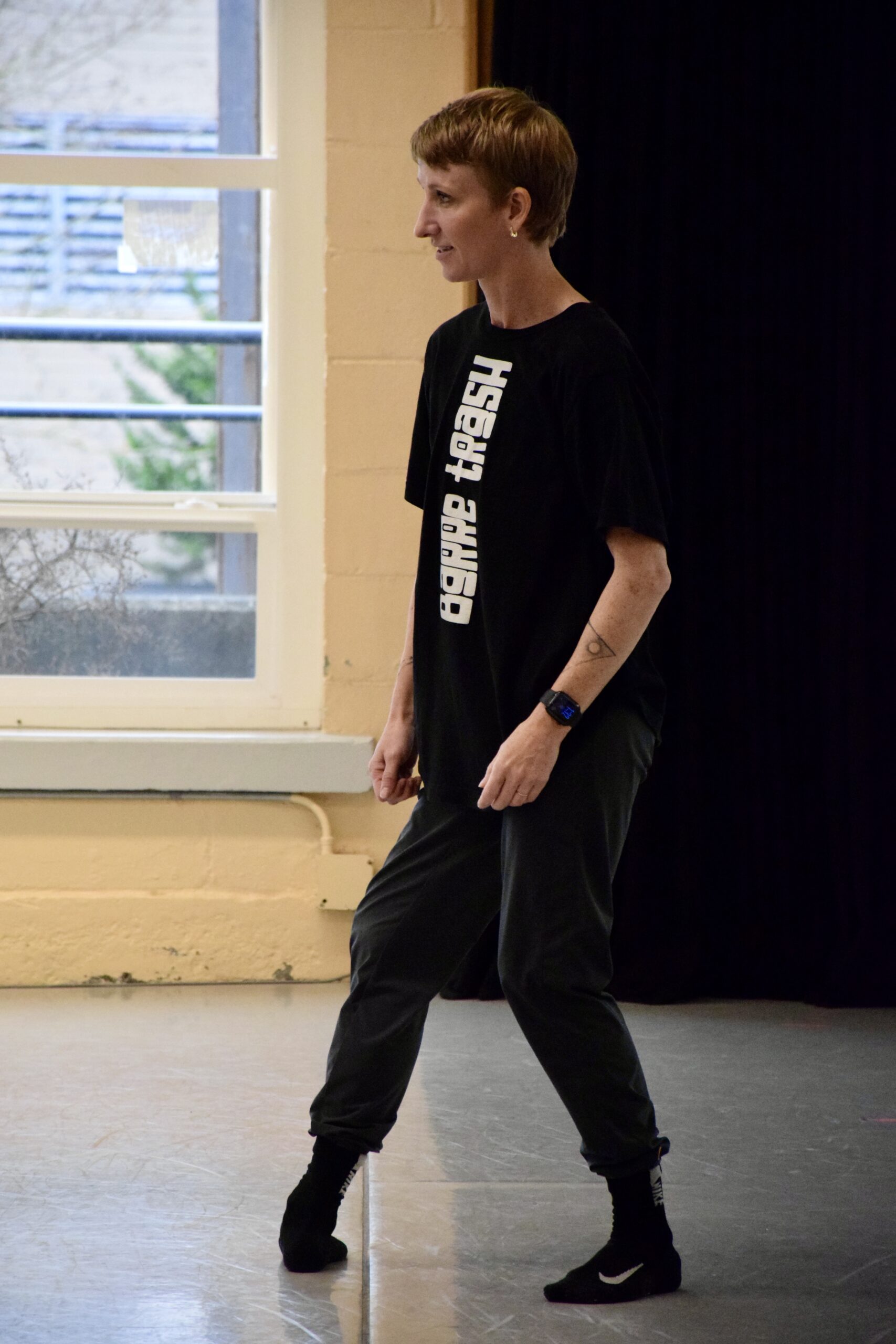
Beth Twigs. Photo by Hadley Kaufmann.
Your artistic and academic work centers consent, agency, and care in rehearsal spaces. How do those values influence the way this piece was built with the dancers?
I treat each creative process as an opportunity for research, centering consent, agency, and care from the outset. With the dancers at Olympic Ballet Theatre, I built the work through collaborative structures such as task-based exploration, shared phrase development, and ongoing dialogue so their voices could meaningfully shape the piece. By working to prioritize transparency and establishing clear, supportive boundaries, I aimed to cultivate trust and create the conditions for risk-taking, curiosity, and artistic investment.
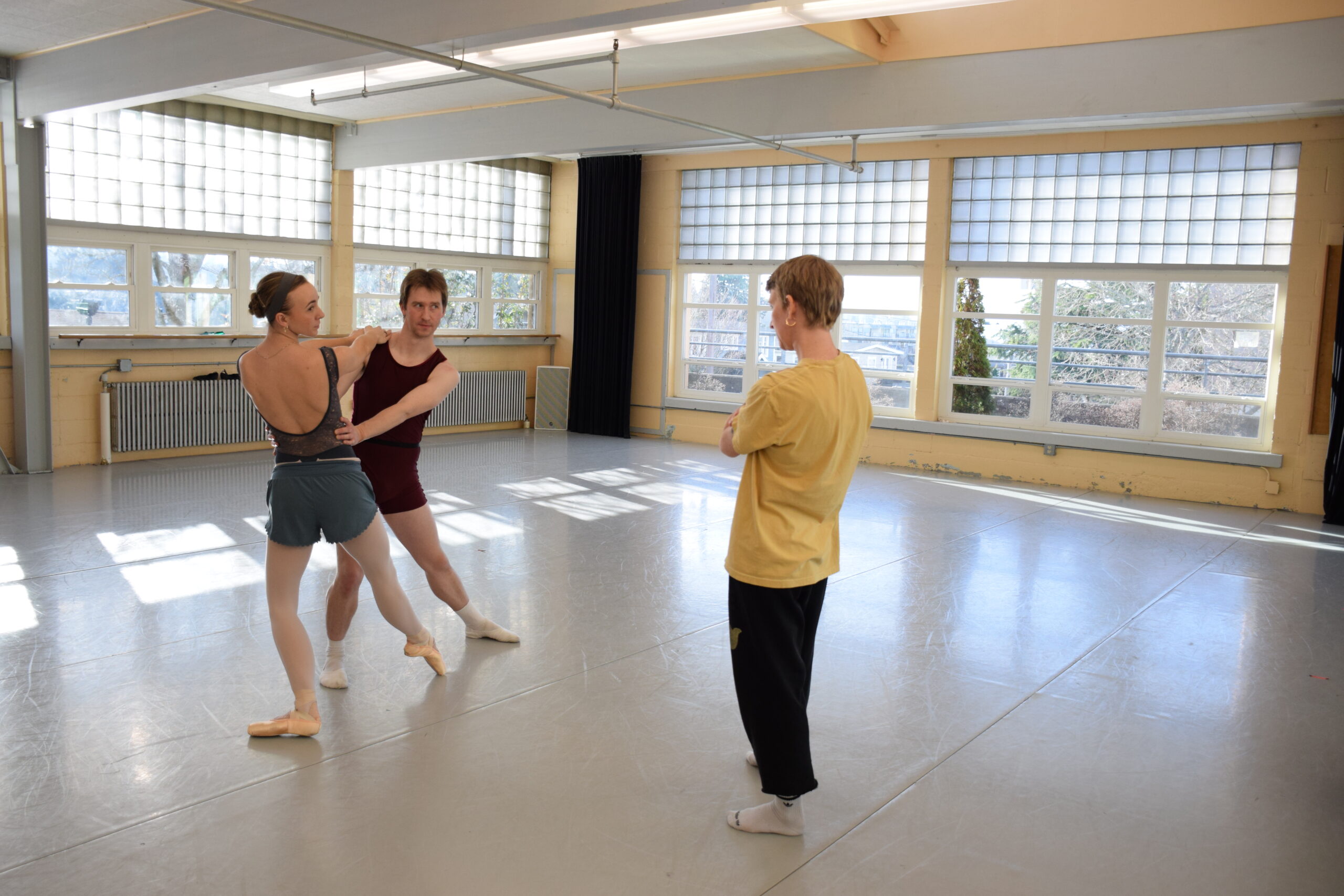
OBT trainee Kirsten Rye and company dancer Wyatt Johnson in Our Tender Distance rehearsal with Beth Twigs. Photo by Hadley Kaufmann.
This is your first collaboration with Olympic Ballet Theatre. What has surprised or inspired you about working with these dancers?
I greatly enjoyed collaborating with the dancers at Olympic Ballet Theatre, whose kindness and openness inspired a welcoming creative environment. Although my lineage is grounded in ballet, my vocabulary moves toward abstraction beyond the classical form — a shift that can sometimes challenge new spaces. Their eagerness and receptivity made the process both inspiring and deeply rewarding.
Rather than offering answers, your work often opens space for reflection. What kinds of questions do you hope audiences leave with after watching Our Tender Distance?
Rather than shaping a singular audience response, I hope to create space for personal interpretation, trusting in art’s ability to gently expand how we see and understand the world. I think that, at its best, ballet offers a window into the layered imaginations of its creators. With this in mind, my work invites curiosity and divergent thought, exploring the “what ifs” of the form so audiences can encounter ballet in ways that feel expansive, resonant, and alive with possibility.
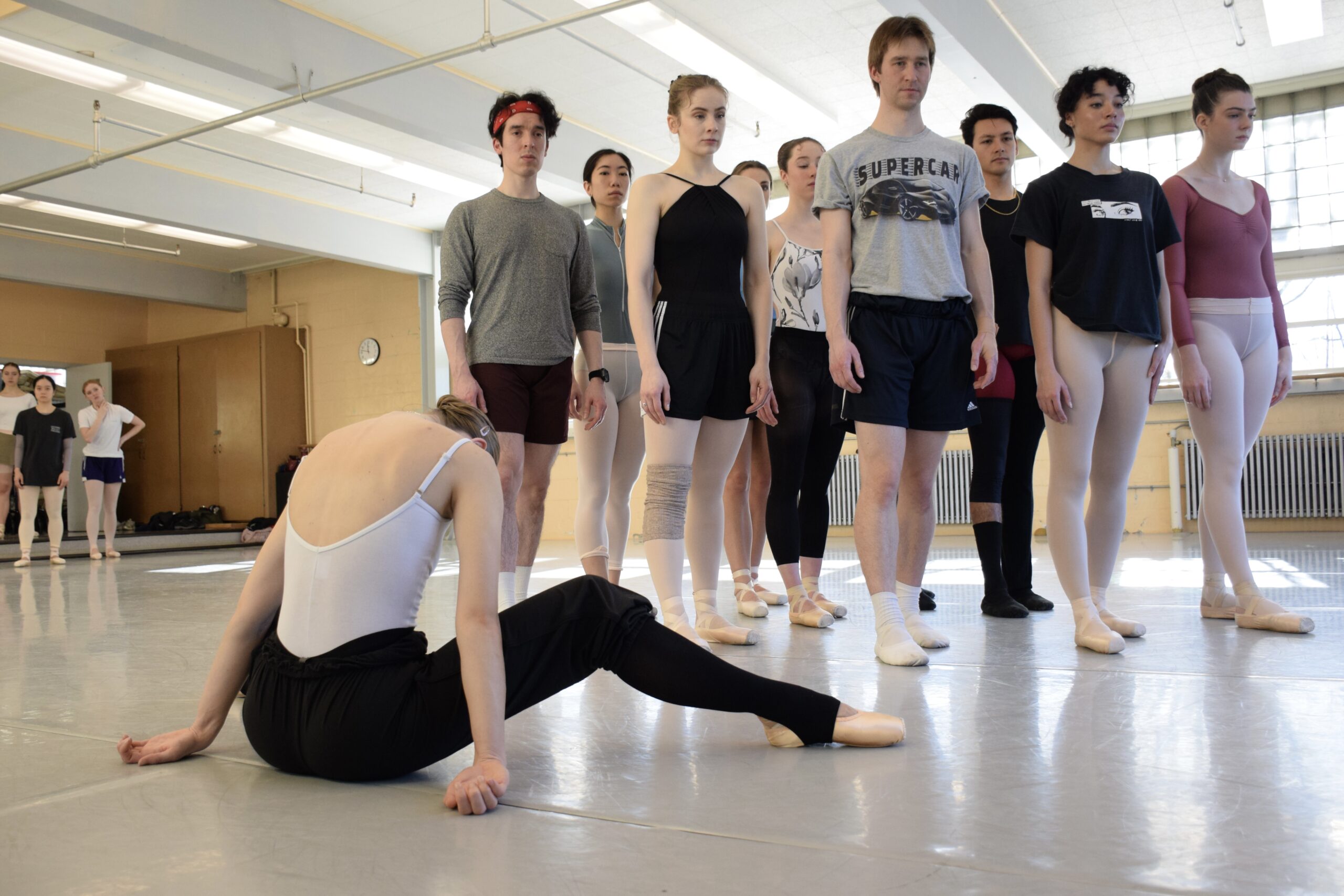
OBT dancers in Our Tender Distance rehearsal. Photo by Hadley Kaufmann.
The choice to dress the dancers in oversized basketball shorts feels specific and intentional. What informed that choice?
In this piece, I was interested in pairing softness and elegance with grit and masculinity. The shorts acknowledge the athleticism at the heart of ballet — something we don’t always see — while the understated tops keep the focus on the dancers’ strength and humanity. My hope was to create an aesthetic that embraces the power in vulnerability.
See Our Tender Distance, in Debuts February 14 and 15, 2026 at Edmonds Center for the Arts.